When you fire up the grill, you shouldn't have to wonder whether it's putting your family at risk. But a grill caked in old grease brings real fire, food and pest problems. Here's what the data says, and what to do about it.
By the numbers: U.S. annual averages for 2020–2024, as published by the National Fire Protection Association (NFPA).
- The grill had not been cleaned in about 1 in 5 (20%) home grill fires.
- Gas grills were involved in an average of 9,235 home fires a year, including 4,662 structure fires.
- About 21,682 people a year went to the emergency room with grill-related injuries (Consumer Product Safety Commission data, reported by NFPA).
1. Grease fires and flare-ups
In NFPA's 2020–2024 figures, the grill hadn't been cleaned in roughly one-fifth of home grill fires. Grease collects on the heat shields, in the firebox and in the drip tray, and when it gets hot enough it ignites. Flare-ups are the warning sign. A full grease fire can spread past the grill, and in our dry desert climate it can catch a patio cover, landscaping or the house.
Fire season isn't only summer here. Nationally, NFPA's 2020–2024 data shows grill fires peak from May through August (July and June are the top months), but Coachella Valley grills get used year-round, so the buildup never gets a break.
2. What ends up on your food
The National Cancer Institute notes that PAHs (polycyclic aromatic hydrocarbons) form when fat and juices drip onto flames and hot surfaces, and the resulting smoke clings to food. A grill coated in old grease means more flare-ups and more of that smoke. Burnt-on carbon and rancid grease also flake onto whatever you're cooking, which hurts flavor at the very least.
Wire grill brushes are another hazard people don't expect. Doctors have documented injuries from bristles that break off, stick to the grates and end up in food. Check the grates after brushing, or switch to a bristle-free brush.
3. Pests
Food scraps and grease attract ants, cockroaches, flies and rodents, and a grill that sits unused for a season makes an ideal shelter. Nests and droppings inside grill cabinets and fireboxes are more common than most people think. Grill manufacturers also warn that spiders and insects can build webs and nests inside burner tubes. That blocks the gas flow and can cause a fire outside the burner.
4. Gas leaks
Leaks or breaks caused 6% of gas grill structure fires in NFPA's 2020–2024 data. Hoses crack, connections loosen and O-rings wear out, especially after years of desert sun. Test the connections at the start of every season with soapy water. If bubbles grow, turn off the gas and don't light the grill until it's repaired.
A quick safety checklist
- Empty the grease tray and catch pan regularly
- Brush grates while warm, then check for loose bristles
- Keep the grill well away from the house, patio covers, overhangs and plants
- Leak-test gas connections with soapy water every season
- Look for webs and nests in burner tubes if the grill has been sitting
- Get a professional deep cleaning at least once a year
How a professional cleaning helps
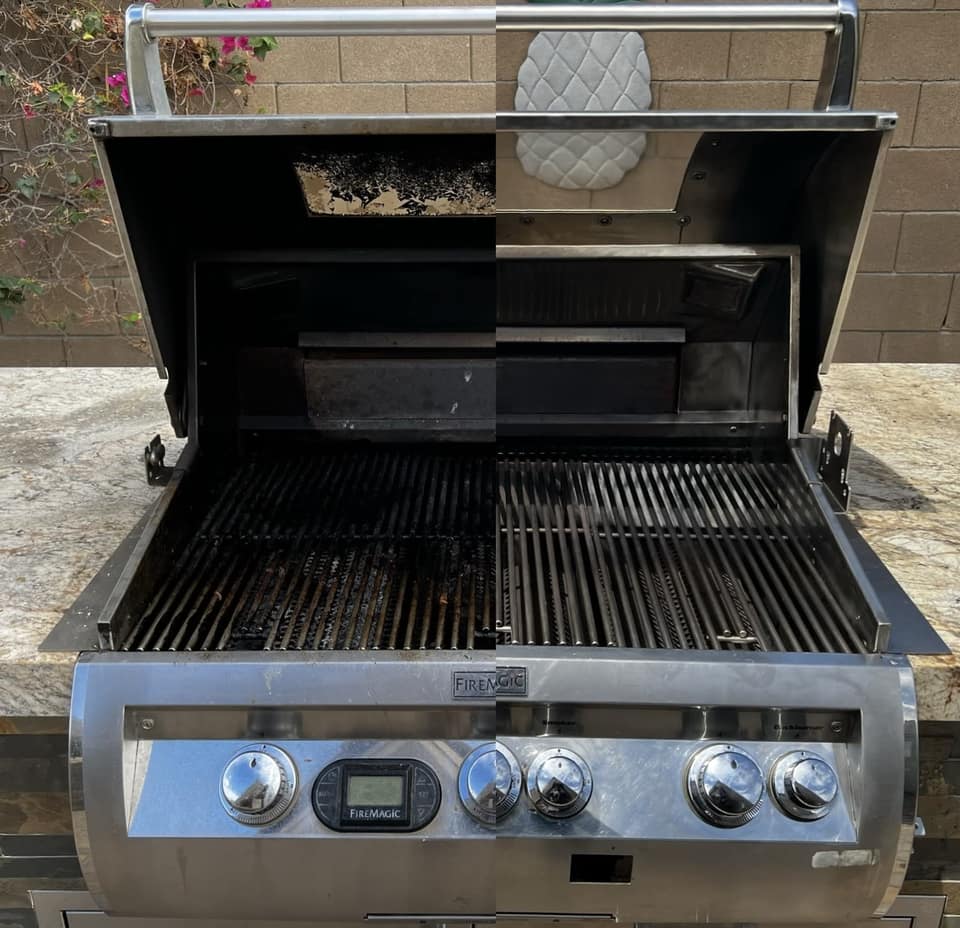
Our deep cleaning removes the grease and carbon where fires start: heat shields, flavorizer bars, the firebox and burner ports. Our process includes steam cleaning. We also clear out nests and debris and inspect burners, igniters and gas components along the way. If something looks unsafe, we'll tell you.
Sources: NFPA: Grilling safety facts (U.S. annual averages for 2020–2024; emergency-room figures from Consumer Product Safety Commission data; accessed September 2026);National Cancer Institute: Chemicals in meat cooked at high temperatures.